
What Is a Phantom Traffic Jam?
A phantom traffic jam is a slowdown or stop in traffic that occurs without any visible reason, such as an accident, roadworks or lane closure.
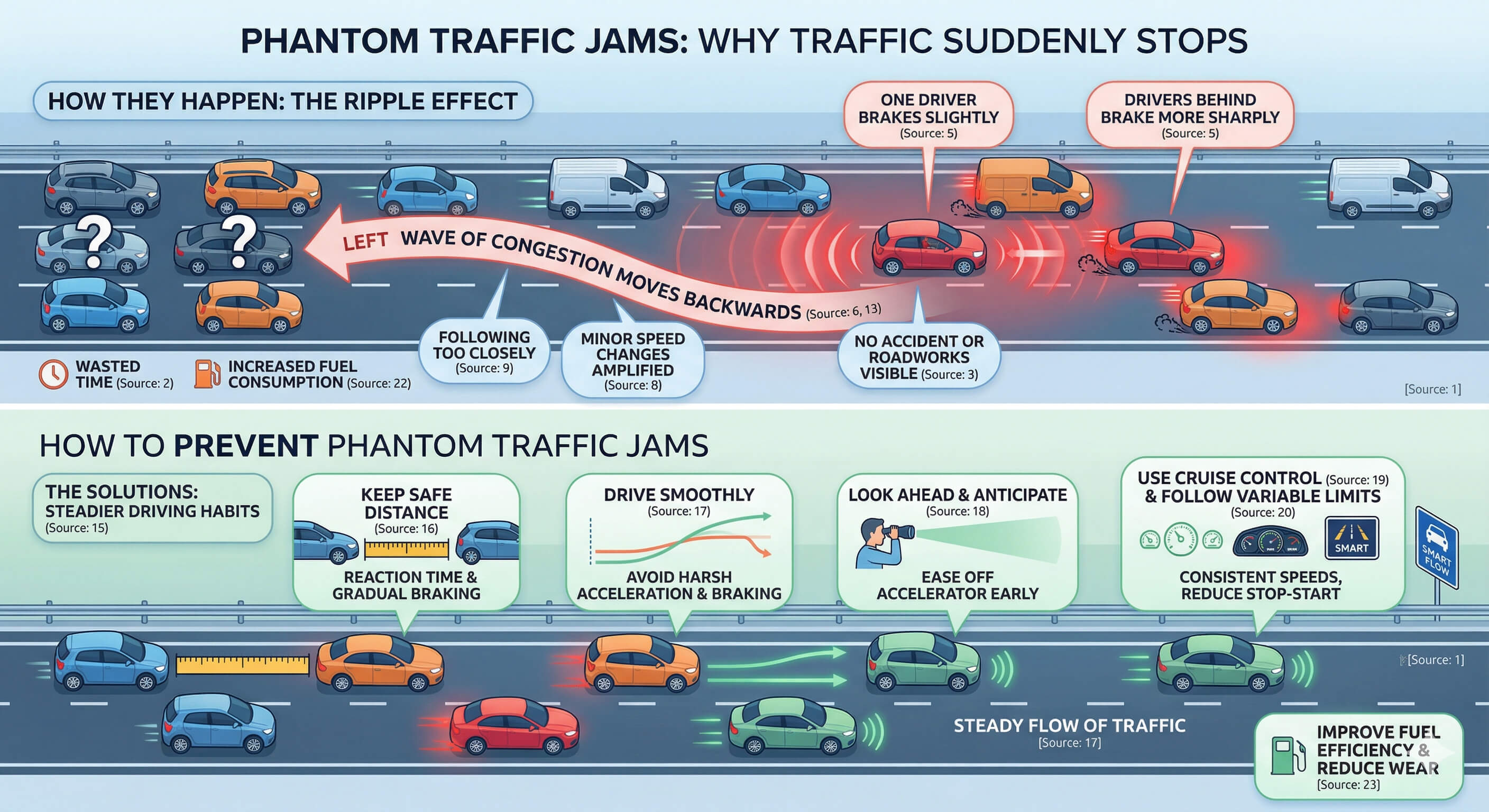
Instead, it is caused by small changes in speed that ripple through traffic. One driver braking slightly can trigger a chain reaction, forcing drivers behind to brake more sharply. This creates a wave of congestion that moves backwards along the road.
In short: There's no crash, no roadworks, no lane closure — just a ripple of braking that builds into a full slowdown. By the time you reach it, the original cause has long gone.
Why Do Phantom Traffic Jams Happen?
Phantom traffic jams are mainly caused by driver behaviour and traffic conditions.
Small speed adjustments are often exaggerated by following drivers, turning minor changes into full slowdowns. When drivers follow too closely, they have less time to react, which leads to sudden braking instead of smooth adjustments.
These jams are most common when traffic is busy but still moving, as there is little room to absorb changes in speed. Lane changes and merging can also disrupt the flow, even if only one vehicle is involved.
How Traffic Waves Work
One of the most unusual things about phantom traffic jams is how they move.
While cars continue moving forward, the congestion itself travels backwards. This is why you might sit in traffic for several minutes, only for it to suddenly clear with no visible cause.
Think of it like a wave: Each car moves forward, but the zone of slow traffic drifts backwards — sometimes at 10–15 mph against the flow. The jam you're sitting in may have started miles ahead, triggered by a single tap of the brakes.
How to Prevent Phantom Traffic Jams
Although you cannot control other drivers, small changes in your own driving can make a difference.
- Keep a safe distance — leaving space between you and the vehicle ahead allows you to react gradually rather than braking suddenly.
- Drive smoothly — avoid harsh acceleration or braking to help maintain a steady flow of traffic.
- Look further ahead — anticipating changes lets you ease off the accelerator early instead of reacting at the last moment.
- Use cruise control — especially adaptive systems, which help maintain consistent speeds automatically.
- Follow variable speed limits — on smart motorways, these are designed to reduce stop-start traffic and keep vehicles moving more evenly.
Fuel-saving tip: Driving more smoothly doesn't just ease congestion — it also improves your fuel efficiency and reduces wear on your brakes, tyres and engine. Stop-start driving is one of the biggest causes of unnecessary fuel waste.
Why Phantom Traffic Jams Matter
Phantom traffic jams are more than just frustrating. Stop-start driving increases fuel consumption, adds unnecessary delays and contributes to congestion without any real cause.
Driving more smoothly not only makes journeys more comfortable but can also improve fuel efficiency and reduce wear on your vehicle.
Final Thoughts
Phantom traffic jams show how small driving habits can have a big impact on overall traffic flow. By keeping your distance and driving more steadily, you can help reduce these invisible slowdowns — and make the road better for everyone.