
The UK Government has set out a new Road Safety Strategy for 2026 and beyond, outlining a long-term plan to reduce deaths and serious injuries on Britain's roads. The strategy marks the most significant reset of road safety policy in over a decade and reflects growing concern that casualty numbers have stopped falling.
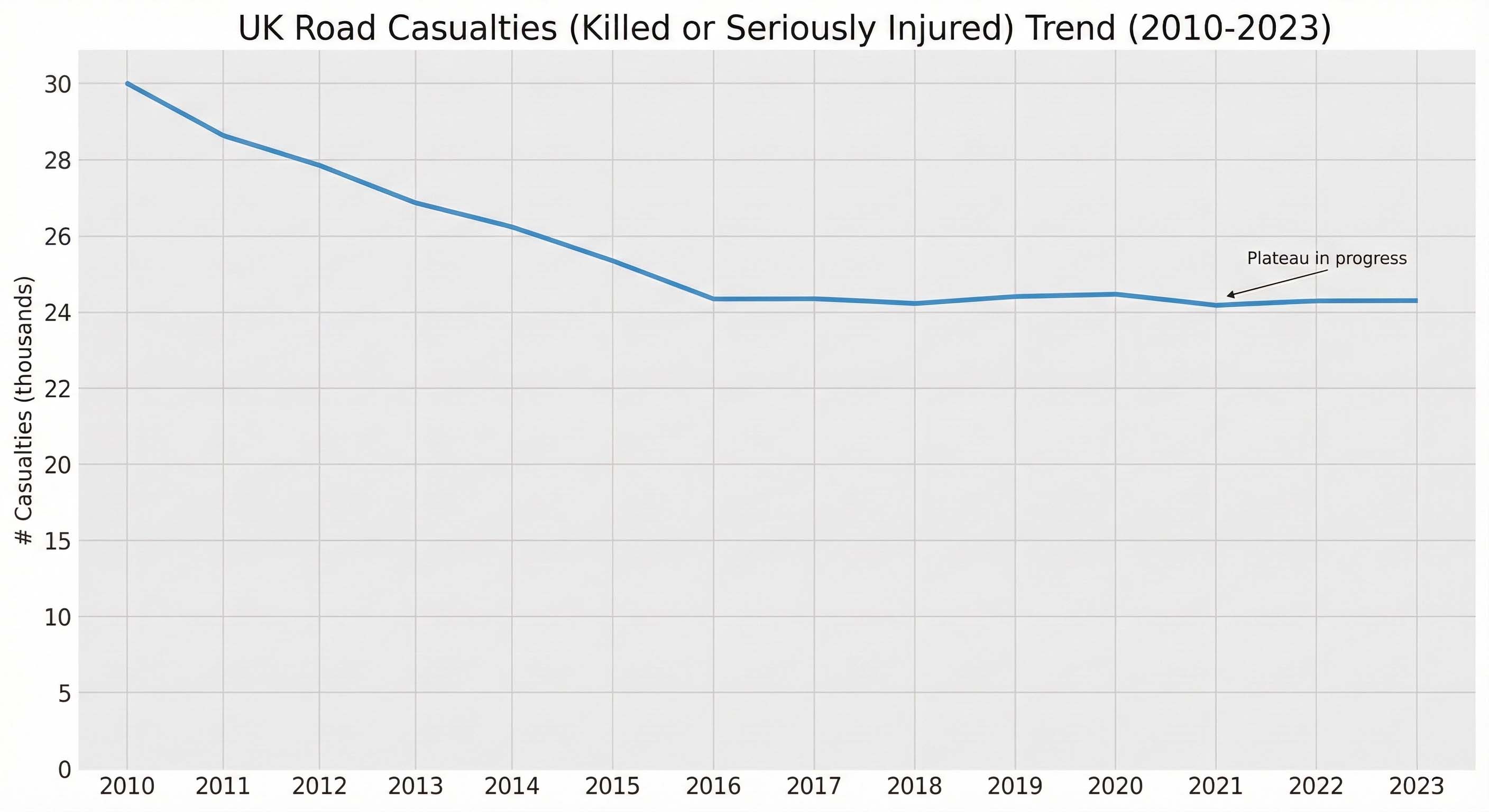
Developed by the Department for Transport, the strategy focuses on preventing serious harm rather than reacting after collisions occur — placing greater responsibility on road design, vehicle standards, and enforcement, not just on individual drivers.
A Long-Term Safety Target
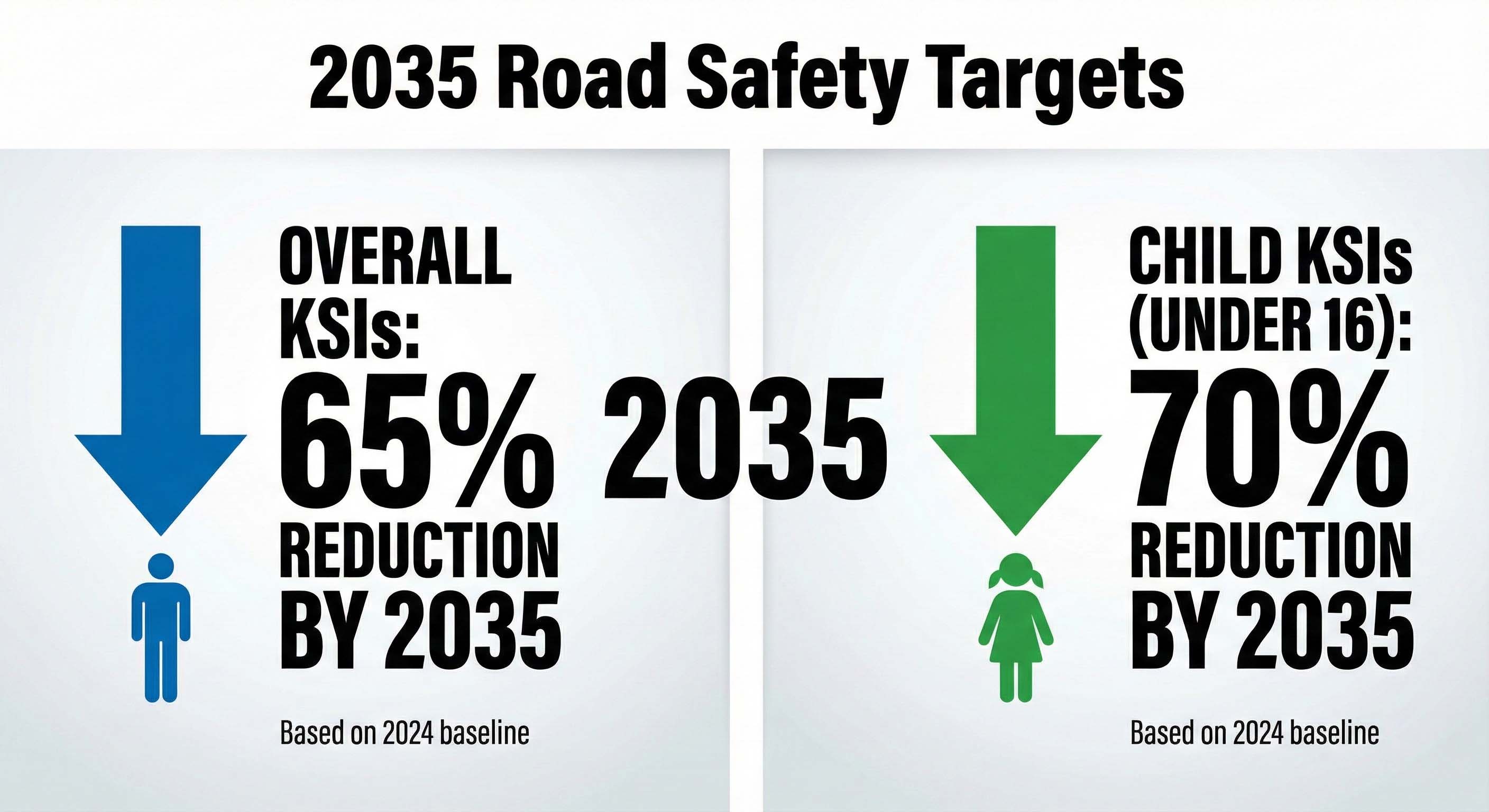
At the heart of the strategy is a national ambition to dramatically reduce road deaths and life-changing injuries over the next ten years, with particular emphasis on protecting children, pedestrians, cyclists and motorcyclists. The Government acknowledges that while human error is unavoidable, the consequences of mistakes should not be fatal.

A Shift Towards "Safe Roads, Safe Vehicles and Safe Speeds"
Rather than relying solely on education campaigns, the strategy promotes a wider "safe system" approach. The aim is to reduce the severity of collisions when they occur — or prevent them entirely.
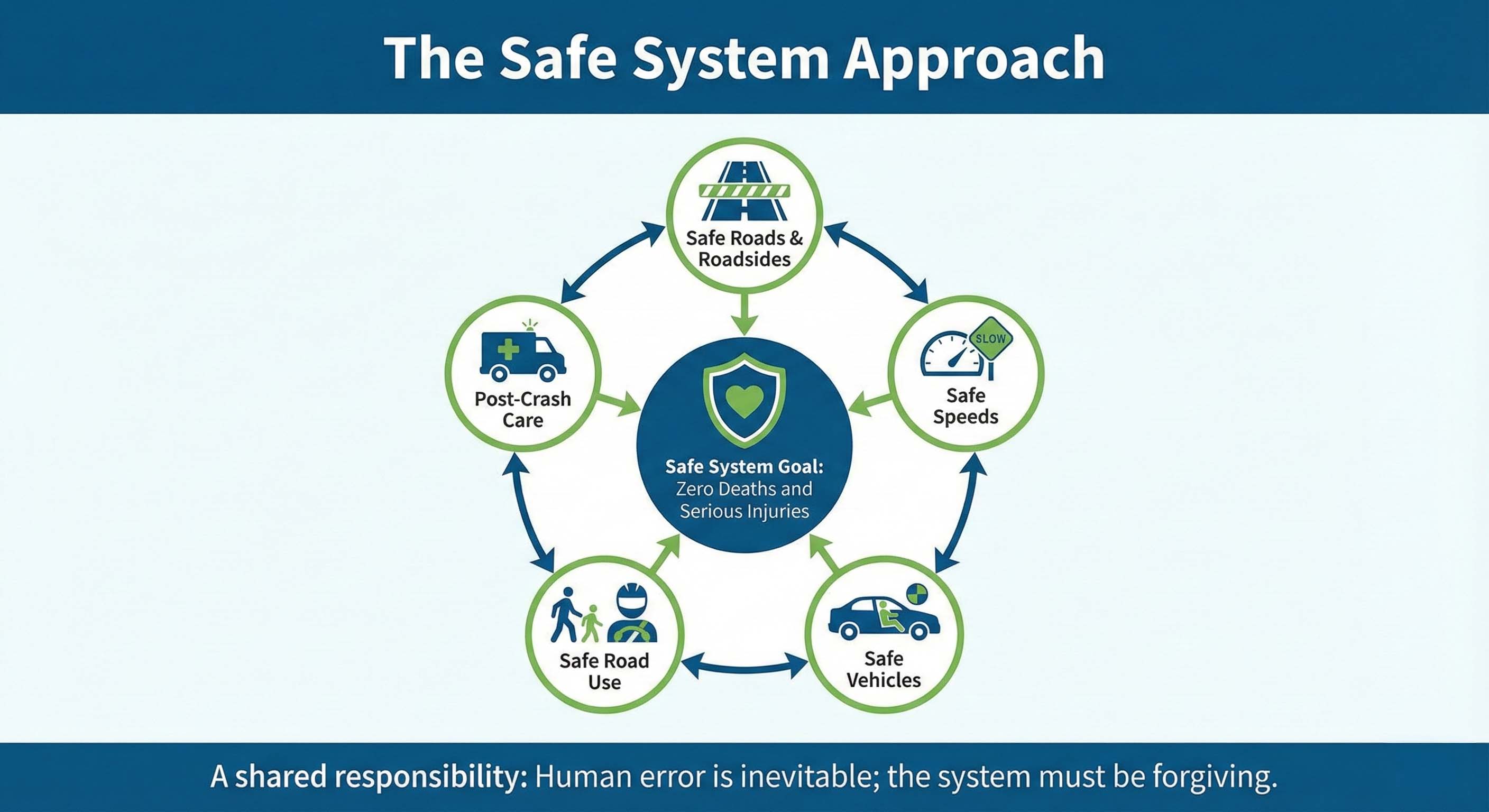
The Safe System Approach Includes:
- Designing roads that reduce the risk of serious injury
- Encouraging safer vehicle technology as standard
- Managing speeds more effectively
- Improving enforcement where risk is highest
Drink, Drugs and Impairment
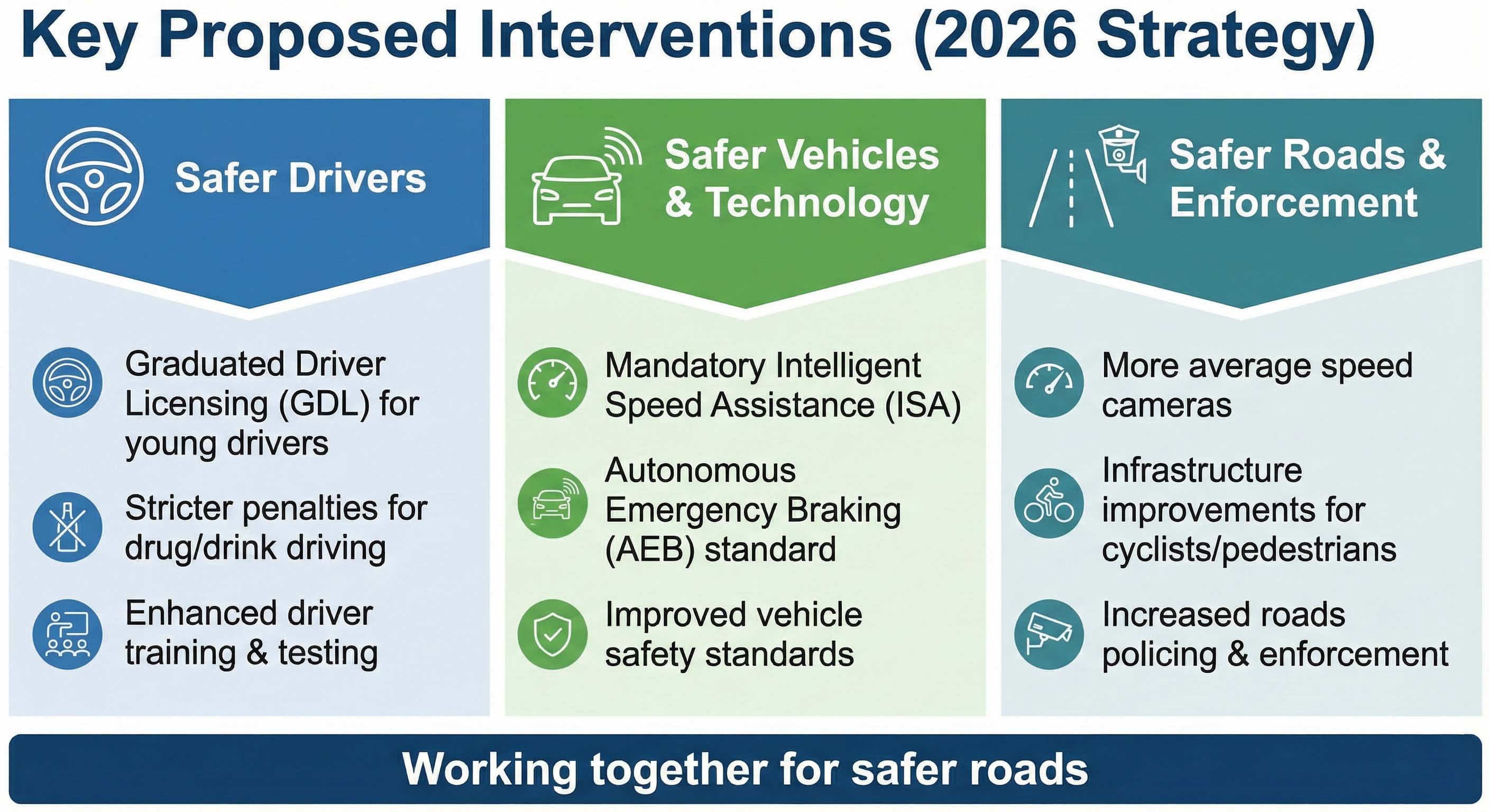
The strategy places renewed focus on impaired driving, recognising it as a significant cause of fatal collisions. The overall message is clear: driving while impaired remains a top enforcement priority.
Proposed measures include:
- Reviewing existing drink-drive limits
- Tougher responses to repeat offenders
- Expanded use of roadside drug testing
- Considering technology that prevents impaired drivers from starting vehicles
New Drivers and Lifelong Driving Standards
Improving driving standards from the outset is another key theme. The intention is to raise standards without unnecessarily removing independence.
The strategy explores:
- Whether learner drivers should complete a minimum learning period before taking their test
- How to better prepare new drivers for real-world conditions, such as rural roads, night driving and motorways
- Ways to support drivers throughout their lives, including reviewing eyesight and medical self-reporting for older motorists
More Vigorous Enforcement Where Risk Is Highest
Rather than blanket enforcement, the strategy supports targeted action in areas with the greatest danger. Improved technology and data sharing are expected to help police identify repeat and high-risk offenders more quickly.
This includes tougher responses to:
- Speeding
- Mobile phone use
- Seatbelt non-compliance
- Uninsured and unlicensed driving
- Misused or altered number plates
Safer Cars and Modern Technology
Vehicle safety plays a central role in the plan. The Government wants wider use of advanced driver-assistance systems, particularly on new vehicles. Over time, these technologies are expected to become a regular part of everyday driving.
These systems can help prevent collisions by:
- Automatically braking in emergencies
- Warning drivers of speed limits
- Detecting pedestrians and cyclists
Better Use of Collision Data
The strategy also highlights the importance of learning from crashes rather than just recording them. Improvements to collision investigation and national data analysis aim to identify trends earlier and prevent similar incidents.
What This Means for Drivers
While many proposals are still subject to consultation, the direction is clear. UK drivers should expect:
- Higher expectations around safe behaviour
- More consistent enforcement
- Greater reliance on in-car safety technology
- A stronger link between road safety, enforcement and the overall cost of motoring
Why This Matters to You
As fuel prices, vehicle costs and penalties all affect the real cost of driving, understanding these changes is becoming increasingly important for motorists. Stay informed about developments that could impact your driving — and your wallet.