
Fuel prices remain a major concern for UK drivers, and many are wondering whether things will improve in 2026. While no one can predict exact prices, recent market monitoring and upcoming changes to price transparency give a clearer picture of what drivers can realistically expect over the next year.
Rather than dramatic falls or sudden stability, 2026 is likely to bring greater visibility, continued volatility, and more responsibility on drivers to shop around.
Prices are likely to remain changeable
Global oil markets are still subject to frequent fluctuations caused by:
- Changes in supply and demand
- Currency movements
- Geopolitical uncertainty
As a result, petrol and diesel prices in the UK are expected to continue moving up and down rather than settling at a fixed level. Short-term price swings are likely to remain a feature of everyday driving costs.
Greater transparency is on the way
One of the most significant developments for 2026 is improved access to fuel price data. New transparency measures will make it easier for drivers to see what different petrol stations are charging before they arrive.
This increased visibility is expected to:
- Highlight price differences more clearly
- Reduce the impact of guesswork and habit
- Put pressure on consistently high-priced stations
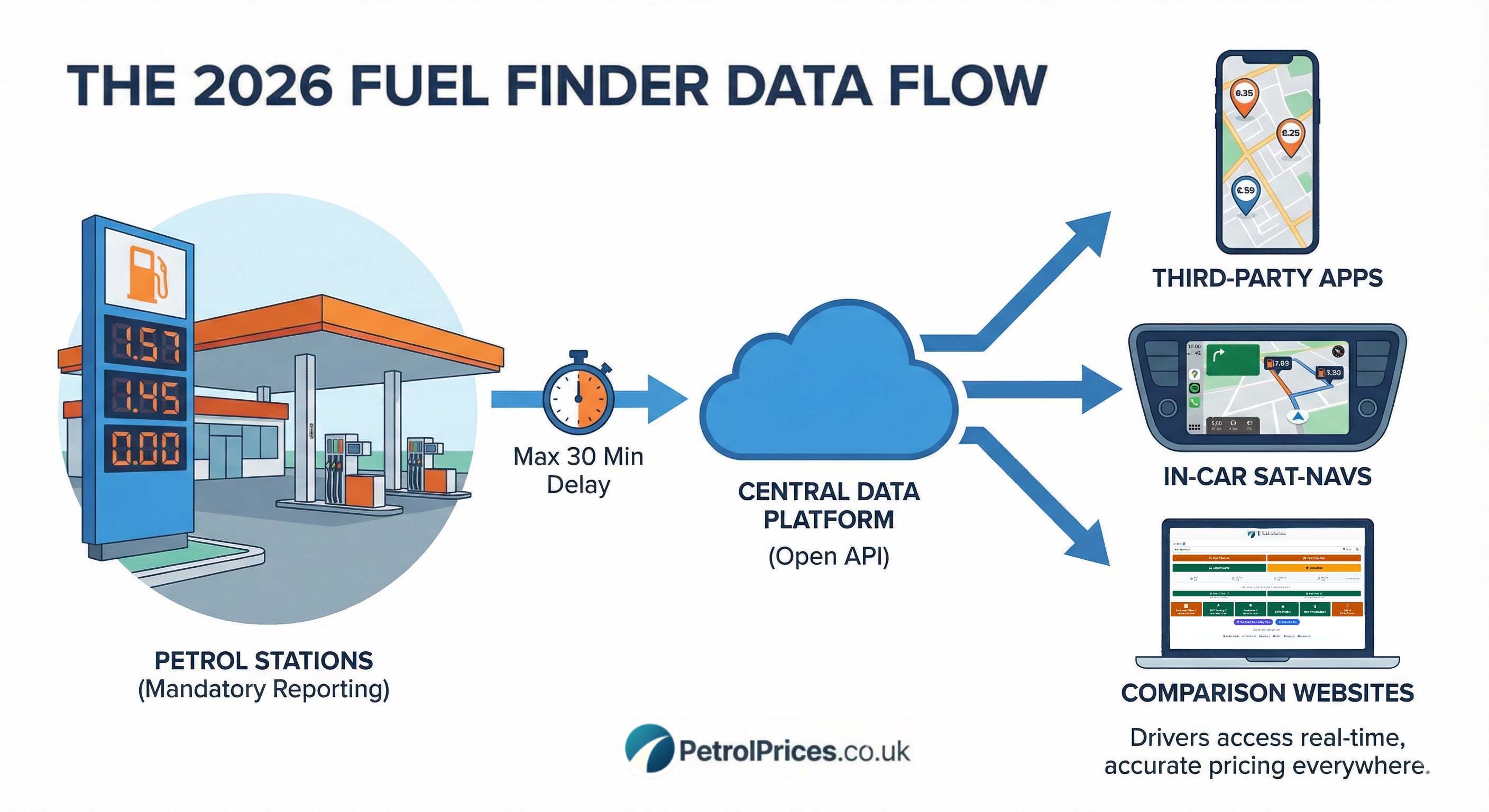
Transparency won’t control prices, but it will make unfair or uncompetitive pricing harder to hide.
Competition may improve — but unevenly
While greater transparency should encourage competition, the effect will not be the same everywhere. In areas with several nearby petrol stations, price competition is likely to strengthen. However, in areas with limited choice, prices may remain higher for longer.
Drivers in well-served areas are likely to benefit sooner than those with fewer alternatives.
Supermarket fuel will stay competitive, not guaranteed
Supermarket petrol stations are expected to remain competitive in 2026, but they will not always offer the lowest prices. Price behaviour will continue to depend on local competition, volume of fuel sold, and pricing strategy rather than brand name.
Drivers should expect continued variation, even among supermarket forecourts.
Margins are unlikely to disappear overnight
Recent monitoring by the Competition and Markets Authority suggests that fuel margins remain higher than long-term norms. While transparency and competition may gradually reduce margins in some areas, there is no quick fix. Drivers should expect pricing behaviour to change slowly rather than suddenly.
What drivers can realistically do in 2026
Rather than waiting for prices to fall, drivers can take practical steps to reduce costs:
- Compare fuel prices before filling up
- Avoid assuming one brand is always cheapest
- Be flexible about where and when they refuel
- Pay attention to local price patterns
Small changes in behaviour can still lead to meaningful savings over time.
Don’t expect dramatic price cuts
It’s important to set expectations. 2026 is unlikely to deliver permanently low fuel prices, perfect alignment with wholesale costs, or identical pricing across locations. Instead, the biggest improvement will be better information, not guaranteed lower prices.
The Bigger Picture
Fuel prices in 2026 will continue to reflect a complex mix of global markets, domestic competition and retailer behaviour. What will change is the ability of drivers to see, compare and respond to those prices more easily.
Drivers who actively check prices and adapt their habits will benefit the most from the changes ahead.
The bottom line
In 2026, fuel prices in the UK are likely to remain unpredictable — but they won’t be invisible. Greater transparency and improved price access mean drivers will have more control than before. The biggest advantage will go to those who use price information, compare options, and refuse to overpay out of habit.