
Many UK drivers look at fuel prices and wonder the same thing: are petrol stations overcharging, or is this just how the market works?
To answer that question, it helps to understand something called fuel margins — a term that often appears in official reports but is rarely explained clearly. Recent monitoring by the Competition and Markets Authority (CMA) highlights why margins matter, and why they play such an important role in the price you pay at the pump.
What is a fuel margin?
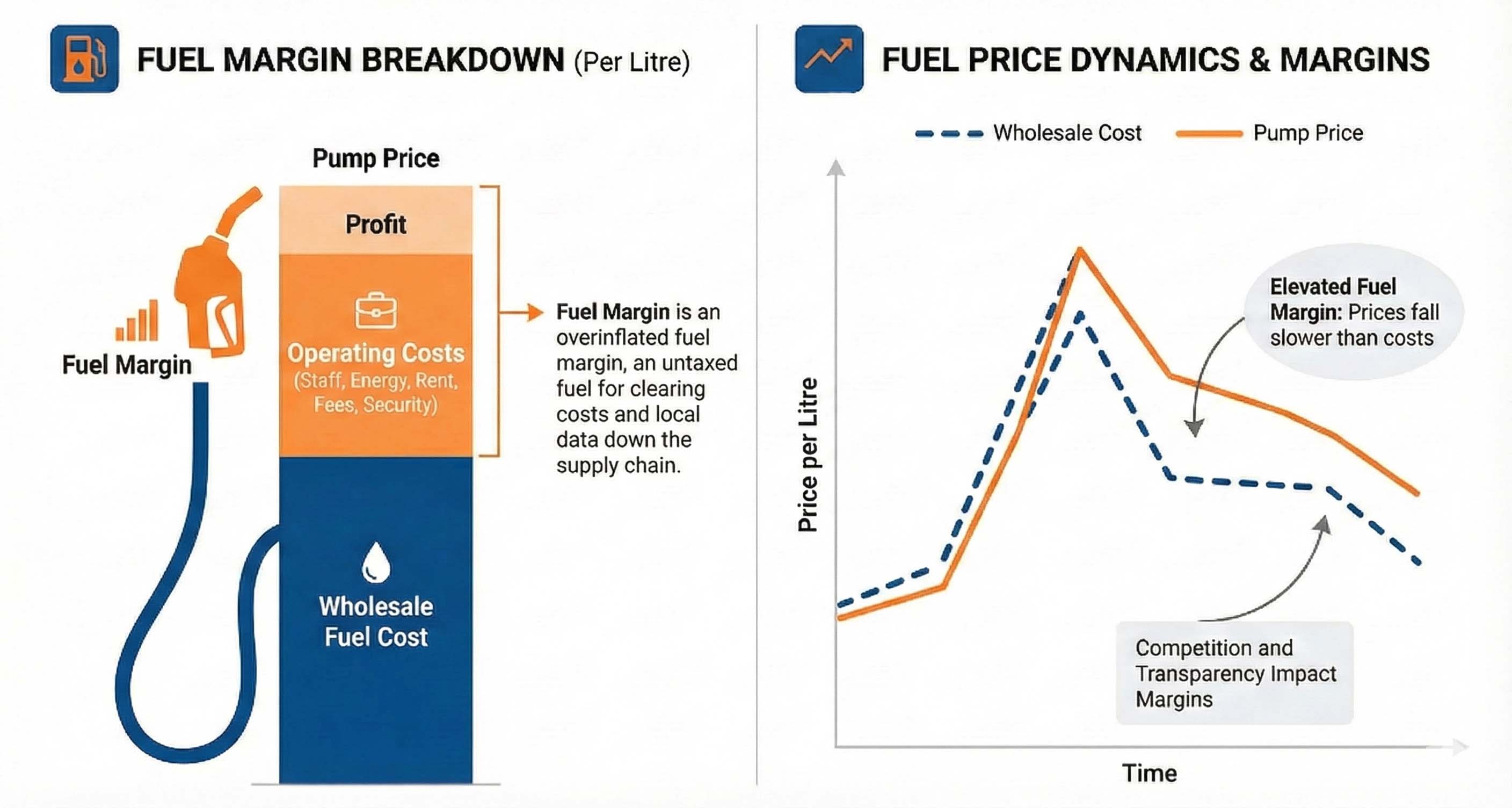
A fuel margin is not the same as profit, but it’s closely related. In simple terms, the margin is:
The difference between what a petrol station pays for fuel and the price it charges drivers.
From this margin, retailers must cover:
- Staff wages
- Energy and utility bills
- Maintenance and rent
- Card payment fees
- Security and insurance
What remains after these costs contributes to profit.
Why margins matter to drivers
When fuel margins are low, pump prices tend to closely track changes in wholesale fuel costs. When margins are higher, prices at the pump can remain elevated even when wholesale costs fall.
This is why drivers often see prices rise quickly when costs increase — but fall slowly when costs decrease.
What the CMA found about current fuel margins
Recent monitoring shows that fuel margins across the UK remain higher than historic averages, and have stayed elevated for longer than expected.
Key findings include:
- Margins increased sharply during periods of high price volatility
- They have not fully returned to pre-spike levels
- Both supermarket and non-supermarket stations show elevated margins
While supermarkets generally charge less than independent stations, both types are earning more per litre than they did historically.
Are petrol stations making excess profits?
Higher margins don’t automatically mean excessive profits — but they do raise questions. The CMA examined whether rising costs could explain these margins and found that operating costs alone do not fully account for the increases.
In other words, while costs have gone up, they don’t explain why margins have remained so high for so long. This suggests that pricing behaviour and competitive pressure play a significant role.
Why competition affects margins
Competition is one of the strongest forces pushing margins down. In areas where several petrol stations operate close together and drivers can easily switch between retailers, margins tend to be lower and prices more responsive.
Where competition is weak — such as in rural areas or locations dominated by a small number of stations — margins are often higher because retailers face less risk of losing customers.
Why prices don’t fall as fast as they rise
Fuel pricing often follows a familiar pattern:
- Cost increases are passed on quickly
- Cost decreases are passed on slowly
This delay allows margins to stay higher for longer. Over time, even small delays can add up to significant extra costs for drivers.
What this means when filling up
For drivers, fuel margins explain why:
- Prices vary widely between nearby stations
- The cheapest station one week may not be the cheapest the next
- Loyalty or convenience can quietly increase fuel costs
A difference of just 3–5p per litre may not seem much, but across a year it can mean paying noticeably more than necessary.
Can anything change this?
Greater transparency is one of the key solutions. When drivers can see prices clearly and compare them easily, retailers face more pressure to keep margins competitive.
This is why upcoming price transparency measures, along with comparison tools, are expected to play a bigger role in helping drivers make informed choices.
The bottom line
Fuel margins help explain why petrol prices don’t always behave as drivers expect. While higher margins don’t automatically mean overcharging, the evidence shows that margins remain elevated beyond what rising costs alone would justify. Until competition strengthens and price changes flow through more quickly, comparing fuel prices remains one of the most effective ways for drivers to avoid overpaying.